
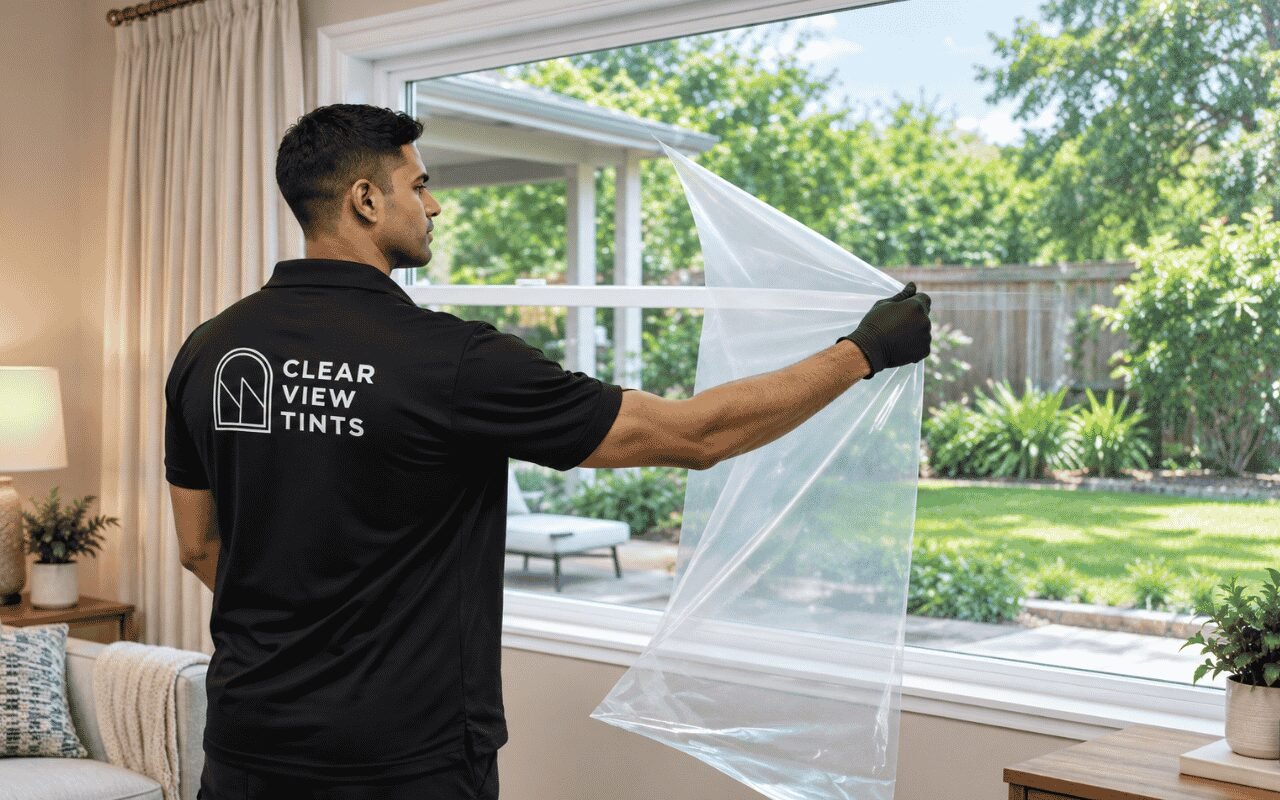
Bubbling tint, lifting edges or patchy frosting can make a maintained office look unfinished. Sometimes the film is deteriorating; sometimes it is still intact but no longer suits the tenancy. Those situations need different decisions.
A condition review should establish what has changed, which panes are affected and whether the underlying glass is sound. It should not assume that every mark requires replacement or that old film can always be removed without risk.
Clear View Tints provides tint film removal in Auckland, alongside replacement tinting and frosting. This guide helps office managers identify when an assessment is worthwhile and what information to gather first.
Separate recent curing from established deterioration
If film was installed recently, contact the installer before treating a hazy patch or trapped moisture as failure.
Some temporary visual changes can occur while installation moisture dries. The curing period depends on the product and conditions.
Old film that has become brittle, lifted away from the glass or developed widespread persistent bubbles needs a different review. Record when the changes began and whether they are spreading. Do not puncture bubbles or press down lifting edges as an attempted repair.
A clear photograph of the affected area and an approximate installation date help the installer distinguish a new-film concern from ageing or damage.
Look for a pattern, not just one blemish
Check whether the problem is confined to an edge, one pane, one elevation or the whole installation.
Repeated edge lifting near handles may suggest a different cause from discolouration across sun-exposed windows.
Useful observations include visible colour changes, scratches, peeling corners, cloudiness and areas where film has already been partly removed. Also note any clear changes in the room’s use: a new workstation, changed lighting or a partition layout may explain why privacy or glare is now unsatisfactory.
A condition record supports a proportionate scope. One damaged pane does not automatically justify replacing every film in the building, but matching an old or discontinued finish may be difficult.
Do not diagnose the glass through the film alone
Cloudiness may be in the film, on a glass surface or between the panes of an insulated glass unit. Film removal will not repair a failed sealed unit or erase a scratch in the glass.
Record visible chips, cracks and frame problems before removal. Where the condition is uncertain, the quotation should allow for an inspection after the old material is removed. A replacement-film commitment should not ignore defects that only become clear at that stage.
This is particularly important where the building has mixed glazing, coatings or unknown previous treatments.
The new film must be checked against the glass, not simply chosen to match the old colour.
Consider whether the original specification still suits the office
A film can be physically intact but no longer useful. A dark tint may now make a shaded room uncomfortable to use. A frosted band may leave a newly positioned meeting table exposed. Old decorative graphics may conflict with the current tenancy’s presentation.
Write the new requirement before selecting a replacement. For exterior windows, compare commercial tinting options around daylight, glare and solar control. For internal partitions, assess commercial frosting around the actual sightlines.
Where frosting is being replaced, include removal of the existing frosted film in the scope. Do not assume it can be covered with another layer without affecting appearance, adhesion or suitability.
Use a simple maintenance priority
First, separate any glazing or frame defect that needs a qualified assessment from a film-only presentation problem. Next, identify film that is affecting an essential room function, such as meeting-room privacy or screen visibility. Finally, consider cosmetic consistency across the wider installation.
This order helps a manager allocate attention without treating every faded pane as equally urgent. It also avoids using new film to hide an underlying glazing issue.
For a planned refurbishment, review film before the final cleaning and handover date are fixed. Removal can be more involved than the visible condition suggests, particularly where adhesive remains or several materials have been applied over time.
Plan removal and replacement as connected decisions
Ask the installer to define the removal area, glass-cleaning scope, disposal arrangements, access requirements and proposed replacement. Note any uncertainty around adhesive or glass condition rather than accepting a vague promise of a ‘complete refresh’.
The occupied-office removal guide covers planning room access and protecting work areas. If the objective is to finish removal and replacement together, read what affects same-job removal and installation.
The final quotation should say whether both tasks are included and what happens if the exposed glass is unsuitable. Some projects can be completed together; others need a change of plan after inspection.
Keep a record of the new installation
Retain product details, pane locations, installation date and applicable warranty documents. Provide cleaning instructions to the facilities team so the new film is not damaged during routine maintenance.
Do not use the warranty period as a prediction that all film will fail on the same date. Equally, avoid ignoring a visible problem simply because a stated warranty period has not ended. The installer or supplier needs to assess the actual issue.
After the replacement has cured, check the original concern: is the room more usable, is the privacy coverage correct and is the appearance consistent with the approved sample?
Frequently asked questions
Does discoloured film always need immediate removal?
Not necessarily. It warrants assessment, especially where appearance or performance has changed, but the correct response depends on condition and use.
Can a damaged section simply be patched?
Sometimes a local replacement is possible, but a patch or replacement pane may not match aged surrounding film. Discuss appearance expectations before deciding.
Will removal restore damaged glass?
No. Removing film and adhesive is different from repairing scratches, cracks, coating damage or a failed sealed unit.
Should every pane be replaced at once?
Only where the condition, matching requirements or agreed project scope justify it. A documented pane-by-pane review helps avoid unnecessary work.
Request a removal assessment
Send photographs, approximate pane dimensions, the building location and any information about the existing film. Request advice from Clear View Tints on whether repair, removal or replacement is the appropriate next step for your office.