
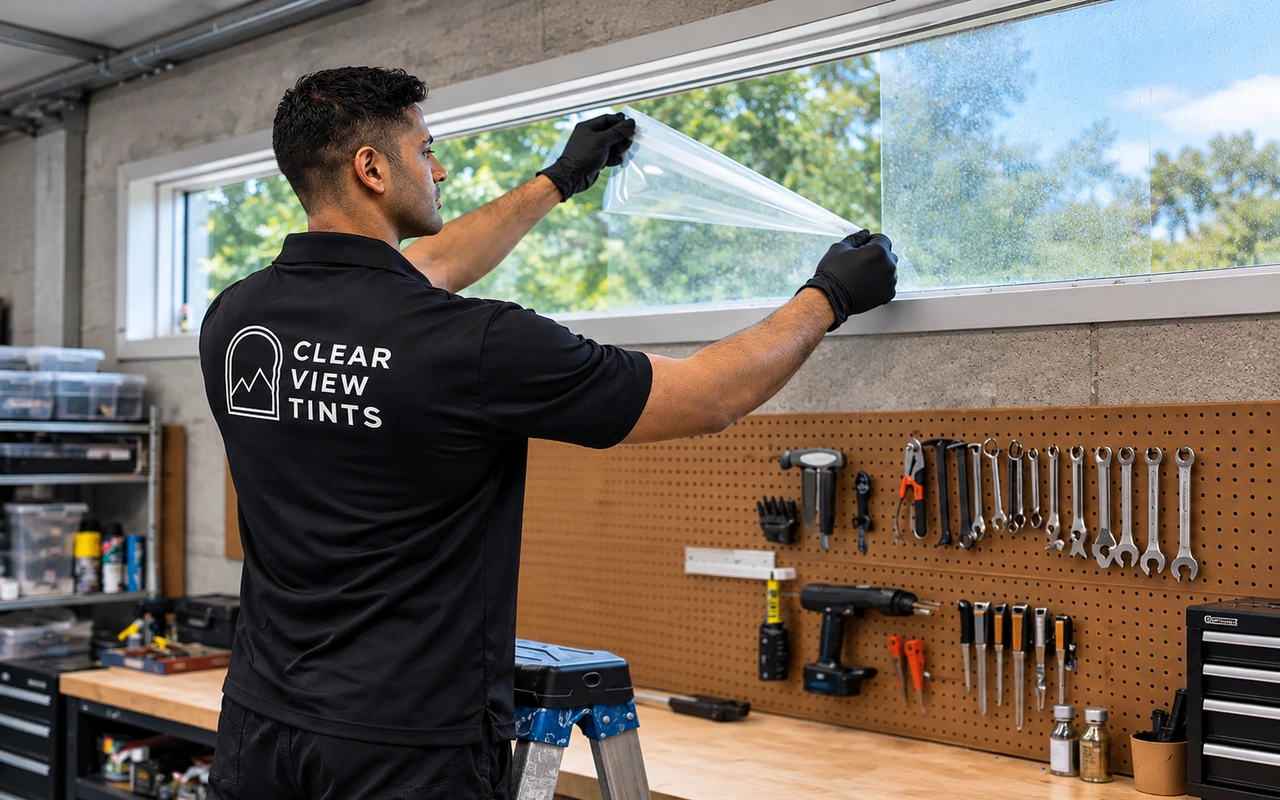
Window film does not need replacing simply because it is old. Its condition, suitability and the way the room is used matter more than an assumed expiry date. On the other hand, persistent peeling, deterioration or a film that no longer provides the required privacy deserves attention.
The first step is to work out what has changed. Is the problem in the film, on the glass, or inside a double-glazed unit? Has the material deteriorated, or have your needs changed since it was installed? Those questions help avoid replacing the wrong thing.
Start with the installation history
Find the product details, approximate installation date and any warranty or care information. Record whether the film is applied internally or externally and whether different windows were treated at different times.
Do not assume neighbouring panes have identical film. A replacement pane, extension or earlier repair may have introduced a different product. That matters when comparing colour, reflection and ageing.
Manufacturer guidance recognises that film life depends on the product and exposure conditions. A warranty term and the useful life of a particular installation are not the same thing.
Look for persistent edge lifting and peeling
Lifting edges can be a sign that the film is no longer adhering properly in that area. Damage can also follow cleaning, abrasion or contact with objects. The cause should be assessed rather than assumed from a photograph.
Do not pull at a loose corner to see whether the rest will come away. Partial removal may leave a more difficult-looking surface and does not resolve the remaining adhesive. Record the affected area and discuss professional tint removal.
Where only one pane is affected, ask whether a replacement can be matched acceptably. If the original film is unknown or no longer available, a single replacement may differ from surrounding panes.
Distinguish old bubbling from new-film curing
Bubbles or patches in an established film can justify assessment. Newly applied film, however, may show temporary moisture haze or water patterns as it dries. The expected appearance and curing time depend on the actual film and installation conditions.
Check the date and contact the installer before deciding that a new installation has failed. Do not puncture, scrape or press on it to remove apparent moisture.
For a closer look at the distinction, see what causes bubbling window tint. Persistent deterioration in old film is different from a condition the installer has identified as part of normal curing.
Investigate colour changes without guessing performance
A marked purple tone, fading or uneven colour may indicate ageing or a change in the film’s appearance. Not every film uses the same construction, and a photograph cannot establish its remaining UV or solar performance.
Compare panes carefully and consider whether different products were installed originally. Reflections from buildings, furnishings and lighting can also alter apparent colour.
The purple window film guide explains why colour is a useful reason to investigate, not a measurement of how much protection remains.
Haze is not always a film problem
A cloudy appearance can come from surface contamination, film deterioration or another glazing issue. In an insulated glass unit, moisture between the panes is not something an applied film can repair.
Check which surface appears affected without using abrasive cleaning or unapproved chemicals. If you cannot tell whether the haze is inside the unit, ask for an assessment rather than booking film replacement on an assumption.
Cracked glass, damaged edges or a failed sealed unit may need glazing work first. New film should not be used to hide a defect that remains unresolved.
Consider whether the film still suits the room
Replacement can be appropriate even when the material is physically intact. A home office may need better glare control than the room’s previous use. A meeting room may need a different frosting layout. A film chosen for daytime screening may no longer meet an evening privacy requirement.
Write down the current need before choosing a replacement. Solar control, frosting and safety film have different functions. The next product should suit the glass and the room rather than simply match the old colour.
For frosting that is scratched or poorly arranged, frosting film removal may be the relevant starting service rather than tint removal alone.
Plan removal and replacement as a sequence
A proper scope identifies the existing film, glass condition, access and intended final result. Old film generally needs appropriate removal and surface preparation before a new installation; do not assume the new product can be applied over it.
The glass may reveal pre-existing marks once the old layer is gone. Discuss that possibility before expecting an as-new surface. The replacement-options guide explains when bare glass, a different film or glazing work may be the next step.
For a house or business with many panes, an agreed sample and a room-by-room schedule can help prioritise work. Do not treat every visually similar window as the same specification without checking.
Frequently asked questions
Does old film have to be removed immediately?
Age alone does not establish urgency. Condition, function and any glass-safety concerns determine what should happen next. Have uncertain damage assessed.
Should new film look perfectly clear straight away?
Not always. Temporary drying effects can occur. Follow the product-specific guidance and speak with the installer about anything unexpected.
Can replacing film fix condensation inside double glazing?
No. A problem within a sealed unit requires a glazing assessment. Film replacement should not be presented as a repair for it.
Can just one pane be replaced?
Sometimes, but product availability and visual matching need checking. The original film and surrounding panes may not match a new sample exactly.
Ask for a condition-based recommendation
Contact Clear View Tints with the approximate film age, whole-window photographs and close-ups of the issue. Explain what the room needs now so the discussion covers both the old material and the right replacement, if one is appropriate.
Related reading
- Residential Window Tint Removal in Auckland: When Home Film No Longer Suits
- How Long Does Window Tint Last in New Zealand Conditions?