
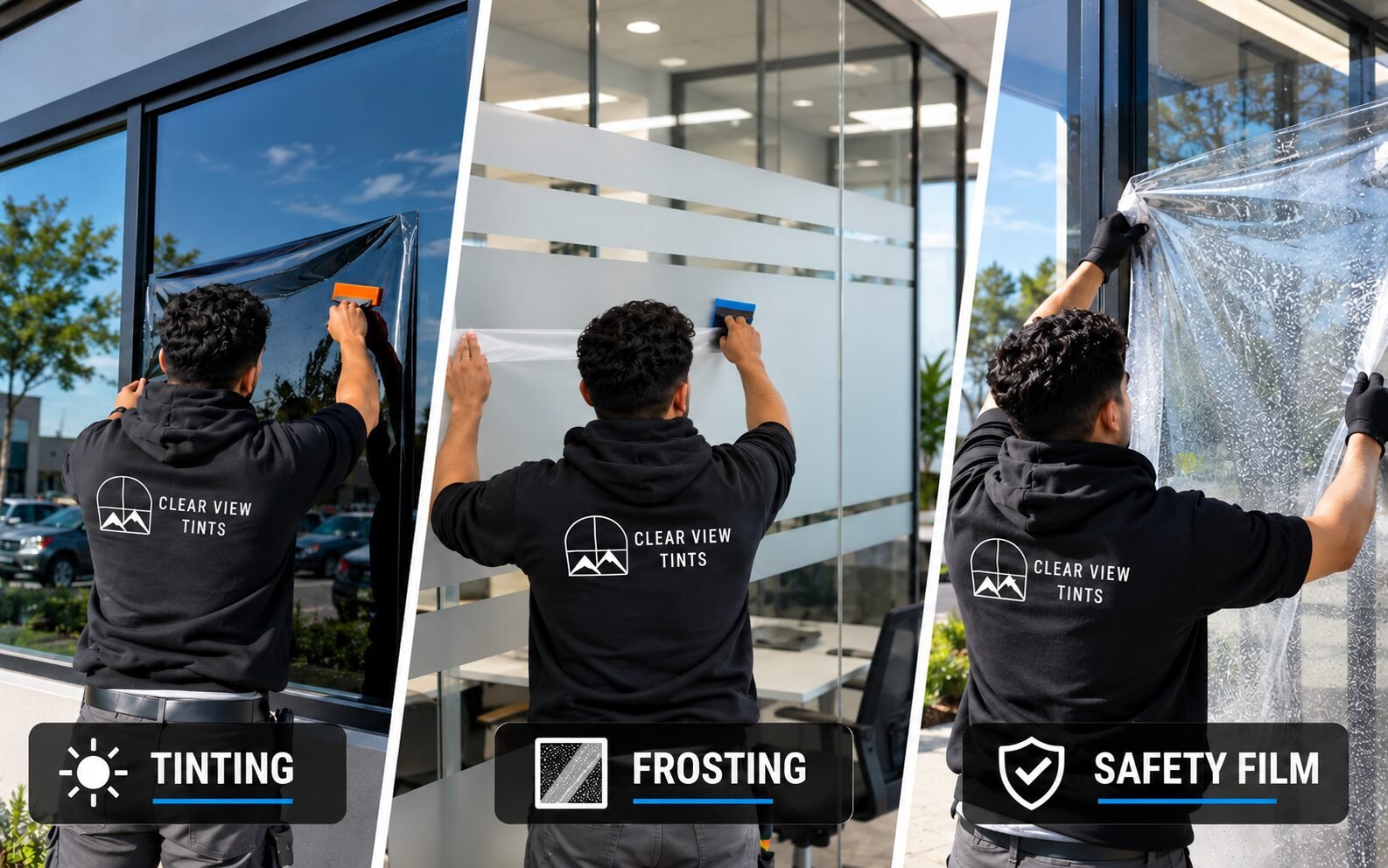
When glazing is causing a problem, the right first step is not always to install another layer of film. A hot workspace may need solar control. An exposed meeting room may need frosting. Old peeling tint may need removal before any new product is considered. Damaged glass may need a glazing professional rather than a film quote.
This guide helps Auckland businesses describe the service they need. It is a starting point for a scope discussion, not a substitute for checking the glass and the proposed product.
Choose tinting when sunlight is the main issue
If the main complaint is solar heat, uncomfortable brightness or screen glare through external glazing, begin with commercial window tinting. Explain when the problem occurs and where staff or customers sit.
The intended outcome should be specific: a usable screen at a reception desk, a less exposed perimeter workspace or a better balance of daylight and solar control. Film performance varies, and glass suitability must be checked.
Do not choose a shade simply because it looks strong. A shopfront, office and meeting room can need different balances between light, reflection and solar performance. Existing blinds or shading may still have a role.
Choose frosting when a direct view needs screening
For internal partitions, consultation rooms or selected shopfront areas, commercial window frosting may be the more relevant service. Define who should be screened from whom, at what distance and under which lighting.
A full panel, a horizontal band and a decorative pattern offer different coverage. Some visible shapes or silhouettes may remain, and decorative film does not provide sound insulation.
Bring an outline of the room and any artwork requirements. Check seated sightlines, monitors and door openings rather than selecting a generic height because it looks familiar elsewhere.
Request a safety-film assessment for a specific glass risk
If the concern is injury from broken glass or a defined protection requirement, start with safety and security window film. Describe the risk and provide any known glass or building information.
This is not interchangeable with ordinary tinting or frosting. The selected film, glass, frame and installation details determine the proposed system. It must not be represented as unbreakable glass or automatic compliance for every location.
Where glass is cracked, badly damaged or unsuitable, repair or replacement may be needed instead. Keep that decision separate from cosmetic improvements.
Choose tint removal when existing solar film is failing
Peeling edges, persistent deterioration or an unsuitable old tint can justify a tint film removal assessment.
First establish whether the visible issue is film, adhesive, surface damage or moisture inside a sealed glazing unit.
Newly installed film can have temporary curing haze; that should not be confused with an established layer that has deteriorated. Follow the actual installation guidance and have uncertain defects checked.
If replacement is planned, specify removal and the new product as connected but distinct parts of the job.
The office film replacement guide explains how to record existing conditions and prioritise work.
Choose frosting removal when privacy needs change
A new tenant may want a different partition design. An office may need more coverage, less coverage or replacement of scratched material. Frosting film removal covers the existing layer and associated preparation where agreed.
Plan for the period when the glass will be clear. A meeting room or treatment space may need temporary screening or to be taken out of use while the change is made. Avoid assuming replacement can be applied over an old layer.
Check the final artwork and coverage before removal starts, especially if the room needs to return promptly to its normal function.
Choose signage removal for old vinyl and graphics
Rebranding, tenancy changes and shopfront refreshes may require signage film removal. Describe the material, substrate, approximate area and access. Glass work should not be assumed to include every painted surface, plastic panel or external signboard.
Older graphics can leave adhesive or reveal differences in the underlying surface. A removal quote should explain what preparation is included and how unexpected damage will be handled. The signage-removal guide explains the sequence in more detail.
Do not assume that new graphics design or installation is included unless it appears in the agreed scope.
More than one service can belong in one project
A single office could need tint on exterior windows, frosting on meeting-room glass and removal of old entrance graphics. Group the requirements by pane or room, rather than asking for one product to solve every issue.
Prepare a simple schedule with the location, measurements, existing material, desired outcome and access conditions. Mark where approval is still needed from a landlord, building manager or another decision-maker.
Once the service type is clear, the film-selection comparison helps frame questions about solar, privacy and safety performance. For budgeting, use the window tinting cost guide and request a project-specific quote rather than relying on a generic rate.
What to send with an enquiry
Useful photographs show the whole opening, a closer view of the issue and the area around the glass.
Include the address or service area, approximate pane sizes, whether the premises is occupied and any known glazing specification.
State the required result in everyday terms. “Stop the corridor view of this desk” is more informative than “install privacy tint” if the underlying need is frosting. “Glare on the till between lunchtime and mid-afternoon” is more informative than “the shop is too bright”.
The initial brief should make the problem understandable without pretending to specify a product before the glass has been checked.
Frequently asked questions
Can one business use tinting and frosting together?
Yes, on appropriate glass and in suitable locations. Exterior solar control and internal privacy often serve different purposes.
Is removal a separate service from installing new film?
It should be identified in the scope. Existing film and adhesive condition can affect preparation and timing even when replacement is booked as part of one project.
Should cracked glass be covered with film?
Do not treat film as a repair for damaged glazing. Have the glass assessed and resolve the defect before deciding whether film is suitable.
Do I need to know the exact film before asking for a quote?
No. A clear description of the problem, the glass and the intended appearance is a useful starting point.
Take the next step
Contact Clear View Tints with the rooms or panes involved and the problem to solve. The aim is a clear, suitable scope covering installation, privacy or removal, with the limitations explained before work is approved.
Technical references
- LLumar: architectural film questions and answers
- LLumar: frosted decorative film
- 3M Safety S80 technical data: application limitations
- MBIE Building Performance: F2 hazardous building materials
- LLumar: architectural film care and maintenance