
A hotel does not use all its glass in the same way. A guest room needs comfortable daylight and a useful view.
A lobby needs a welcoming appearance. A conference room may need screen visibility and privacy at different times of day.
Window film can be considered for those needs, but specifying the same finish everywhere can create avoidable compromises. A room-by-room approach is more useful than choosing a single tint shade for the whole building.
For Auckland hotels, the decision also needs to account for room availability, guest movement, cleaning and access. Clear View Tints’ commercial window film service provides a starting point for discussing the glazing, intended result and practical scope.
Guest rooms: balance comfort with the outlook
Start with rooms where direct sun creates a specific problem. Ask housekeeping or operations staff when those rooms become difficult to use and whether guests tend to keep curtains closed. Check the window orientation, existing glass, shading and cooling arrangements.
The film should be assessed for solar control, daylight and appearance together. A darker shade can change the view and indoor light level, while a lighter product may not provide enough glare control for a particular window. Compare samples in the actual room where practical.
Do not promise an identical temperature reduction in every room. Film affects the glazing’s solar performance, while room temperature also depends on ventilation, occupancy, equipment and the building’s wider thermal conditions.
Night-time privacy still needs attention
A solar-control film that provides some daytime privacy should not be treated as a substitute for curtains after dark. Visibility depends on the light on either side of the glass. When a guest room is brightly lit and it is dark outside, a daytime privacy effect may not provide the screening expected.
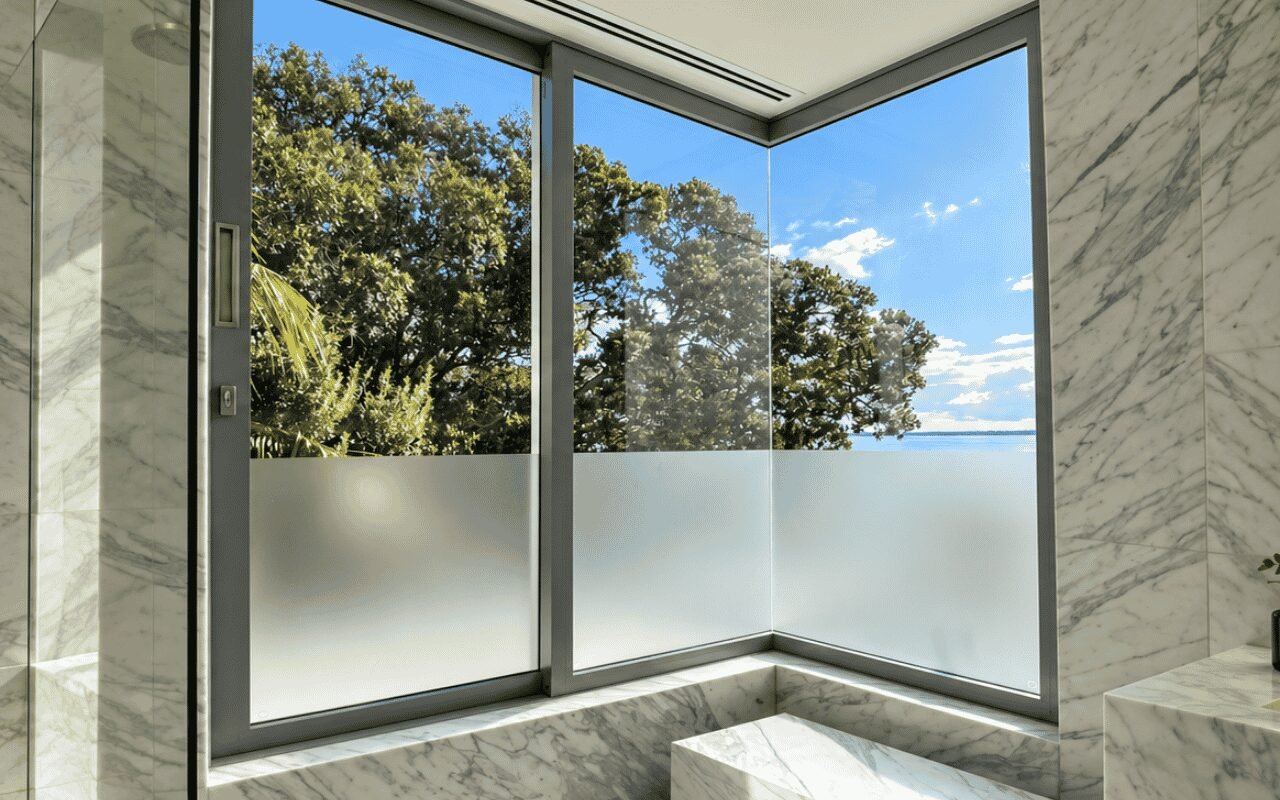
Keep suitable curtains or blinds where guests require adjustable or night-time privacy. For selected bathroom or internal glazing, assess a suitable frosted or opaque treatment rather than relying on a reflective appearance.
Where views are part of the guest experience, make the privacy decision explicitly. A full frosted treatment may screen a view effectively but removes the clear outlook that a guest-room window was intended to provide.
Lobbies and lounges: follow the sun and the seating
A lobby can have a problem at only a few seats or at a particular desk. Map the glare on reception screens and the sun exposure on lounge furniture before specifying film across an entire elevation.
The exterior appearance matters too. Review the sample from the street and inside the lobby, including how it affects the visibility of entrances and signage. The aim is to improve usability without unintentionally making the frontage feel closed.
UV-control film may help protect furnishings, but fading has more than one cause. The commercial UV-protection guide explains why material sensitivity, heat and visible light still need consideration.
Conference spaces need a flexible light plan
Ask how each room is used: daytime meetings, presentations, video calls, dining or evening events. A film that works well for normal meetings may not provide the darkness needed for projection.
Consider window film alongside adjustable shading. Film can provide continuous solar or glare control, while blinds or curtains accommodate changing presentation needs. Test the preferred sample with the actual screen or display where possible.
For glass partitions between rooms and public corridors, commercial frosting may provide visual screening. It does not create acoustic separation. Confidential conversations still need an appropriate room and operational arrangements.
Back-of-house and safety requirements are separate
Internal offices, staff rooms and administration areas can have different privacy needs from guest spaces.
Keep those requirements separate in the schedule rather than assuming a guest-facing finish is appropriate everywhere.
If glass safety or security is part of the project, obtain a specific assessment of the glazing and intended system. Ordinary solar film is not a substitute for a tested safety-film specification or for replacing defective glass.
Existing window construction also needs review before solar film is selected. Double glazing, low-emissivity coatings and other glass characteristics affect compatibility. Manufacturer recommendations apply to the film and glass together.
Plan access around room availability
List the rooms and panes included, agree who releases each work area and record any limits on access.
Installation and old-film removal need clear working space; guests should not be expected to remain in the immediate work zone.
Discuss whether a pilot room or a small initial area would help confirm appearance and access arrangements.
A pilot is especially useful where several room types or glazing constructions exist. Do not assume the outcome on one pane proves suitability across the building.
Confirm whether the quotation includes removing existing tint. Removal, adhesive condition and inspection can affect the programme. The commercial installation planning guide explains the information that helps reduce avoidable disruption.
Give housekeeping a usable care record
Film is not maintenance-free. Provide the product-specific curing and cleaning instructions, identify treated panes and make sure contract cleaners receive the same information. Abrasive cleaning or scraping can damage filmed surfaces.
Avoid applying temporary signs, tape or decorations to film without checking suitability. Where the building changes its presentation regularly, include that use in the initial discussion.
Retain the installed product details, pane schedule, accepted sample and applicable warranty documents. Do not use a generic lifetime claim in place of the actual terms for a commercial installation.
Frequently asked questions
Can film remove the need for curtains in guest rooms?
Not generally where guests require night-time privacy or room darkening. Film and curtains can perform complementary functions.
Should the whole hotel use one film?
Not automatically. Room use, elevation, glazing and appearance requirements should guide the specification.
Can an occupied hotel be assessed for film?
Yes, an assessment can identify suitable work areas and access needs. Installation timing and operational arrangements must be agreed for the particular property.
Plan a hotel glazing review
Prepare a room list, photographs, known glass details and the main comfort or privacy concern for each area.
Request a hotel window film assessment from Clear View Tints to discuss a scope that fits the building and its operation.
Related reading
- Window Film for Customer-Facing Auckland Premises: Hotels, Clinics and Reception Areas
- Choosing Solar, Privacy or Safety Window Film for an Auckland Business