
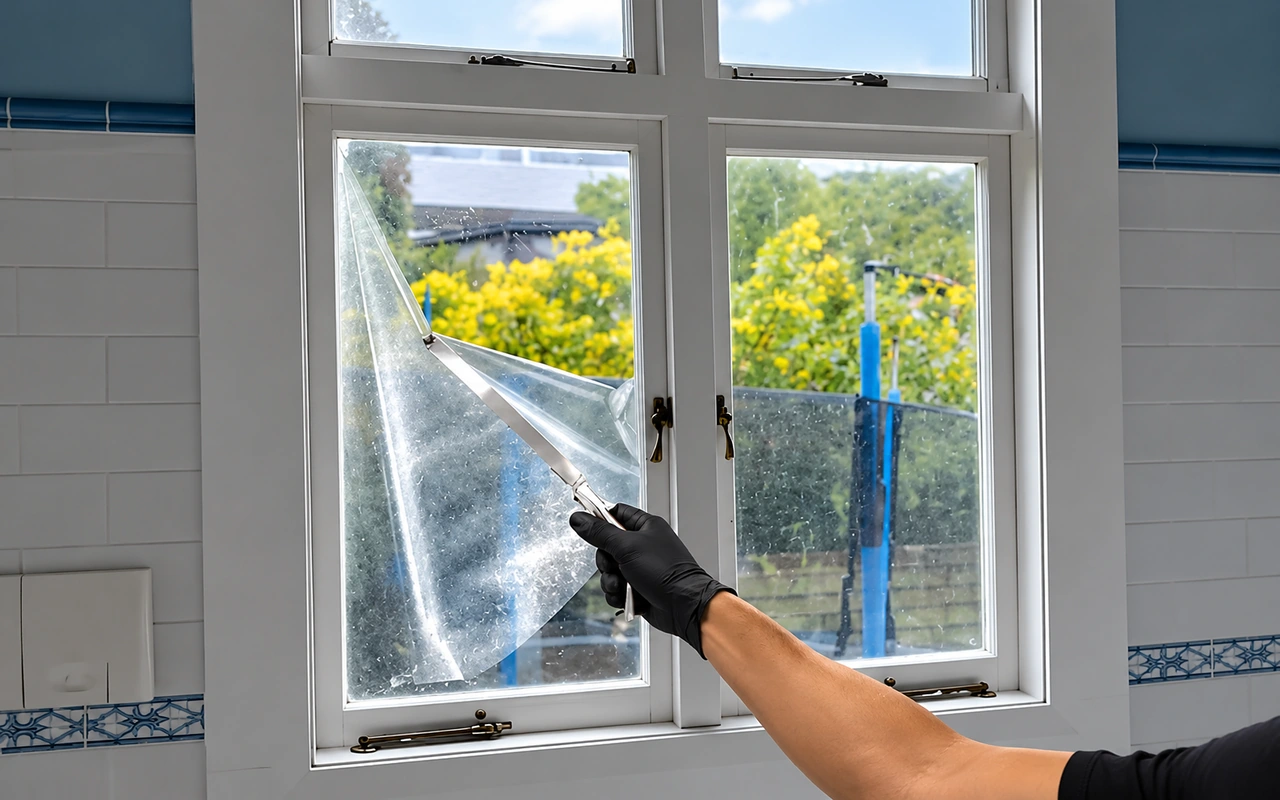
Old window film, adhesive residue and damaged glass are different issues. A peeling layer may look untidy without proving the glass is defective. Conversely, a film can hide existing scratches or make it harder to see what is happening within the glazing.
The right question is not whether all old film damages glass. It is whether the particular film, glass, coating and condition are suitable, and how removal can be carried out without introducing avoidable damage.
Distinguish the film from the glazing
Film deterioration can include edge lifting, colour changes, surface marks or persistent bubbles. Glass problems can include cracks, chipped edges, coating damage or a failed sealed unit. The two may be present together, but one visible symptom does not automatically identify the other.
Haze between the panes of double glazing, for example, is not an applied-film problem that can be cleaned from the room-side surface. Film removal will not repair a failed sealed unit.
Describe where the mark appears and whether the film’s installation history is known. An assessment should identify what can reasonably be established before recommending tint film removal.
Compatibility matters, not just age
Applied film changes how glazing handles solar energy. Suitability depends on the selected product, glass type, existing coatings and other conditions. Manufacturers and industry guidance use film-to-glass compatibility considerations for this reason.
Do not assume any dark film can be installed on any pane, or that replacing an old layer with a similar colour is automatically safe. Glass construction, shaded areas and edge condition can matter to the assessment.
For insulated or coated glazing, the double-glazing guide explains why identifying the glass is part of product selection. Age alone cannot answer the compatibility question.
Adhesive residue is not automatically etched glass
Removing a film can leave adhesive that needs appropriate preparation. The fact that residue remains after peeling does not prove the glass has been permanently damaged.
However, not every outline or cloudy patch is removable adhesive. Scratches, weathering differences and coating changes may remain visible. The cause must be distinguished before a cleaner surface is promised.
The adhesive residue guide explains why a professional scope includes inspecting the exposed surface rather than assuming every mark will disappear.
Removal methods can create avoidable risks
Blades, abrasive pads, unsuitable chemicals and uncontrolled heat are not universal answers for glass. Coated surfaces and particular glazing conditions need appropriate treatment. Instructions for one film and substrate must not be applied indiscriminately to another.
Do not start by scraping a small corner and assume that makes the whole pane safe to work on. If the glass specification is unknown, investigate it first. Height, access and the surrounding frames or finishes also matter.
The DIY versus professional removal guide focuses on deciding when the job needs professional assessment, not on a single removal recipe for every window.
Document existing defects before work
Photograph visible cracks, chips, scratches and other marks before removal. Include the frame, opening and adjacent finishes. Where practical, record pane identifiers so both parties know which surface is being discussed.
Some defects may only become visible once the film is removed. A transparent scope should explain that possibility and how unexpected findings will be handled. It should not declare that removal can never affect glass or that every underlying mark was caused by the old film.
If a pane is already damaged, the safe course may be to involve a glazing professional before continuing. New film is not a structural repair.
Inspect the surface before choosing a replacement
Once the old material is removed and the agreed preparation completed, inspect the exposed glass. Check remaining marks, any coating concerns and whether a replacement film remains suitable.
This is an important decision point. The planned new film may still be appropriate, or a glazing defect may need addressing first. Where the original installation was chosen for a different purpose, reassess the current room requirements too.
A replacement specification should identify the actual product and its intended application, rather than relying on a generic description such as “same tint again”.
Ask questions that clarify the scope
Before booking, discuss what is known about the glazing, whether film or graphics are on more than one surface, and what access is available. Ask whether the quote includes adhesive preparation, disposal and assessment of the surface after removal.
Also ask how unexpected damage or an unsuitable surface would affect the job. A clear process for stopping and discussing a problem is more useful than an unconditional claim of damage-free results.
Retain the resulting records with any new film’s care and warranty information. They provide context for future maintenance or replacement work.
Frequently asked questions
Does old film chemically attack every window?
No such blanket conclusion should be made. Film condition, adhesive residue, glass compatibility and glazing defects need to be considered separately.
Can a scraper damage glass?
An unsuitable tool or method can damage surfaces, particularly where coatings or other vulnerabilities are present. Do not assume all glazing tolerates the same treatment.
Will removing film fix cloudy double glazing?
Not if the problem is inside a sealed unit. Establish where the haze is before deciding which trade or service is needed.
Can new film go on immediately after removal?
Only if the glass is suitable, properly prepared and the proposed film is compatible. A newly revealed defect may change the plan.
Have the glass and film assessed together
Contact Clear View Tints with photographs, known glazing details and the desired final result. The aim is to understand the condition and removal scope before making promises about the glass underneath.
Technical references
- International Window Film Association: glass compatibility, fading and lifespan
- Avery Dennison: architectural film installation and maintenance, February 2026