
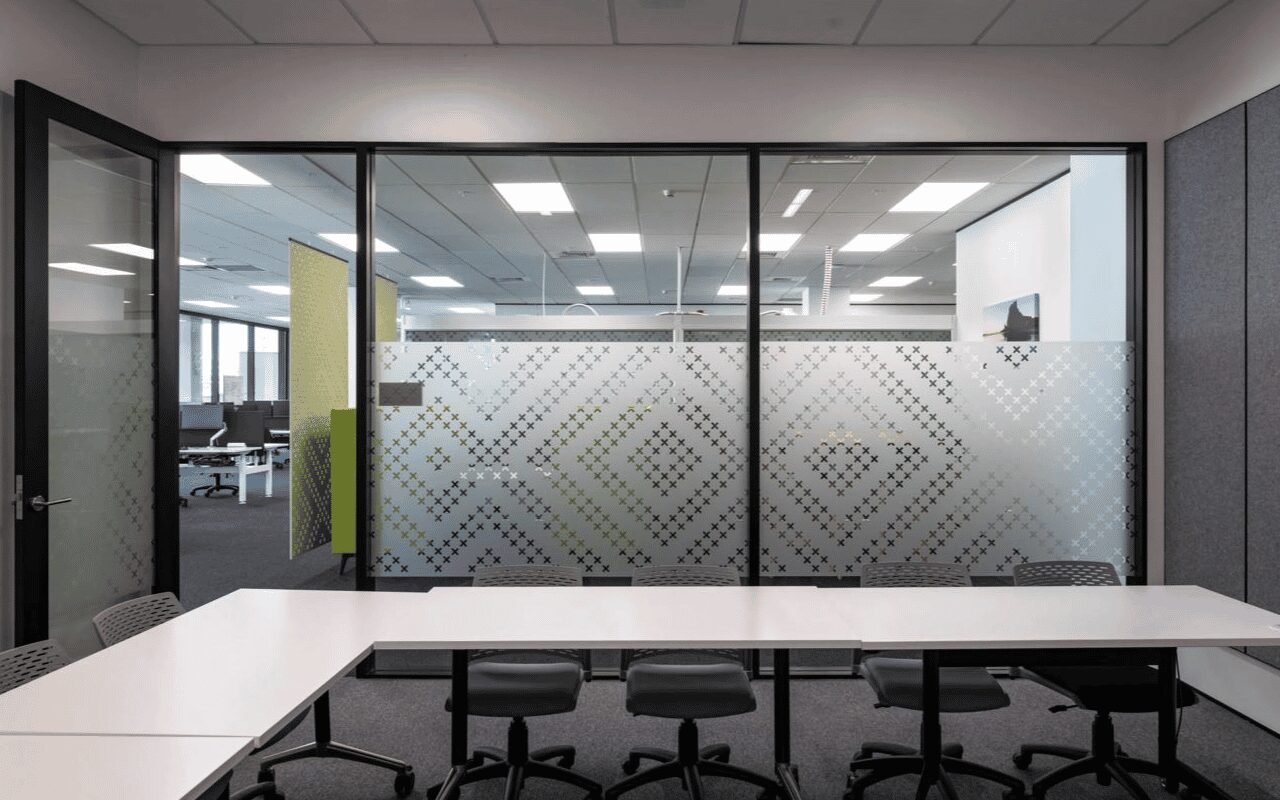
Clear glass makes an office feel open, but it can also expose a meeting, a computer screen or activity behind reception. Frosted film offers a way to change those sightlines while retaining light through the partition.
A good office frosting layout begins with what needs to be screened. Full-height coverage is not always necessary, and a narrow decorative band is not always enough. The position of seats, corridor levels, doors and screens should guide the design before anyone chooses a pattern.
Clear View Tints provides commercial window frosting in Auckland. The following points help office managers and fit-out teams prepare a practical privacy brief.
Check the view from both sides of the glass
Stand where visitors, staff and seated occupants will actually be. A band that screens a seated person from a nearby corridor may leave them visible from a stair landing or a higher floor. Door openings and clear areas beside the film can also create overlooked sightlines.
Consider what is being protected. Screening general movement is different from preventing a document or screen being read. Mark the required coverage on a drawing or temporary plan before approval, and assess a film sample in the room’s lighting.
Frosted films blur views while transmitting light, but the result depends on the product, coverage and scene behind the glass. A person close to a backlit pane may still cast a visible silhouette.
Meeting rooms: privacy without a closed-in layout
For a meeting room, start with the table height and the paths people use outside it. A broad central band may screen seated occupants while retaining a clear strip above. Full coverage may be more appropriate for a room used for sensitive discussions or video calls.
Remember that frosting is a visual treatment. It does not provide acoustic privacy, hide sound through a door gap or replace a suitable room design for confidential conversations. It also cannot prevent a view through an open door.
Where screens contain private information, test the sightline to the screen itself. Do not assume that obscuring a face also obscures text displayed higher on the wall.
Reception and internal partitions
Reception areas often need selective screening rather than complete separation. A treatment might reduce views into a staff work area while leaving the entry welcoming and keeping wayfinding clear.
On a run of partitions, align the film design with the joinery and door panels. Confirm how bands continue across door leaves, sidelights and corners. An inconsistent height can look unfinished even when the film is neatly applied.
For a shared office, think about the people seated at different distances from the glass. The layout should suit the actual furniture arrangement, not just an attractive photograph of an empty fit-out.
Compare bands, full coverage and decorative layouts
A simple band is useful where one defined sightline needs screening. Full coverage offers broader visual separation but removes more of the clear view. A decorative design can identify rooms or add branding, although transparent cut-outs may reduce privacy.
Choose the design and the function together. A large logo cut out of frosted film can create a clear window directly into the space behind it. Ask the team to identify any privacy compromises before artwork is approved.
Film that resembles etched glass can be assessed as an alternative to changing the pane itself. The frosting versus etched-glass comparison explains the differences in permanence, maintenance and replacement decisions.
Do not confuse frosting with solar control or glass safety
A bright perimeter office may have two problems: visibility through an internal partition and solar heat through exterior windows. Frosting can address the first without necessarily providing the solar performance required for the second.
Where heat or screen glare is the concern, assess commercial window tinting separately. Where impact safety is involved, seek an appropriate safety-film assessment. A decorative finish does not establish a tested safety rating.
Some buildings also need particular visibility markings on glass doors or circulation routes. The project designer or responsible glazing professional should confirm what is required; a decorative band should not be assumed to satisfy every building requirement.
Plan the installation and future changes
Measure each pane and record door hardware, handles and existing graphics. If film is already present, establish whether frosting removal is part of the scope. Removing only selected pieces can leave differences in appearance or adhesive that need attention.
For leased offices, confirm permission and any reinstatement requirements. Although film can be removed, its removal is a separate job and the condition of the underlying glass still matters.
The installation area needs clean access. Schedule the work around meetings, move furniture away as agreed and give staff clear instructions about when the room can be used. Aftercare should be passed to the cleaning contractor as well as the office contact.
Approve a sample before the full layout
Use the sample to assess the finish, the amount of light retained and how much detail can be seen from the relevant position. Photographs alone can be misleading because camera exposure changes the appearance of translucent materials.
For an office in Takapuna, or another Auckland location, the same principle applies: the room and sightlines determine the coverage. The address does not tell you which frost density or band height is right.
Record the approved pattern and dimensions. Changes after installation can require replacement pieces, particularly where a continuous design crosses several panes.
Frequently asked questions
Can frosting be fitted to existing office partitions?
Often, yes, where the glass and surface are suitable. Existing coatings, damage and old film should be checked before the installation is confirmed.
Will frosting make a meeting room soundproof?
No. It changes visibility, not the acoustic performance of the room.
Can a logo be included?
A design may include branding, subject to the available film and fabrication method. Review transparent areas carefully if privacy is the main objective.
Is full coverage always better?
Not necessarily. It may provide more visual screening, but the decision should balance privacy, daylight, views and the room’s use.
Request an office frosting quote
Share photographs of the partitions, pane dimensions and the sightlines you need to screen. Contact Clear View Tints about your office frosting project to discuss a layout that suits the space rather than a one-size-fits-all pattern.
Related reading
- Choosing Privacy Film for Bathrooms, Offices and Entry Glass
- Window Frosting Ideas for Takapuna Offices, Clinics and Professional Spaces